
The good you are doing by drinking here
There’s a quiet idea we keep coming back to at BetterWorld: that an ordinary cup of coffee is never really ordinary. Every cup is the end of a long chain — soil, farmers, roasters, milk, packaging, the town it’s poured in — and that chain either leaves the world a little better or a little worse. When you drink here, you’re pulling on the better end of it. This is what your cup actually does.
It starts on a farm that was treated well. Coffee is one of the most heavily sprayed crops in the world, and some of the chemicals used on it overseas are banned here at home. Every coffee we pull is organic — and so is the decaf, the tea, the milk, and even the flavors. That choice ripples backward down the chain: to soil kept alive with compost and shade rather than doused with synthetic pesticides, and to growers who are paid fairly for looking after their land and their people. Well-tended farms make better coffee, too. You can taste the difference, but the more important part is that your morning ritual isn’t adding to anyone’s toxic load — yours or a farmworker’s.
It keeps a real community running. When you buy here, the money largely stays here. It supports local jobs, small makers, and the artisans whose wood, pottery and preserves share our shelves. Compare that to the standard model, where the profit from your cup is routed to a corporate balance sheet far from the town that earned it. Same drink, completely different destination.
It makes less of a mess. The coffee industry’s default is the single-use cup — petroleum-lined, hard to recycle, and effectively permanent once it’s tossed. We work the other way: plant-based, compostable packaging, less plastic, and fewer disposables wherever we can manage it. One cup won’t save a landfill. A town’s worth of better choices, repeated daily, genuinely adds up.
It’s real food, not a masking act. A lot of chain coffee leans on sugar and additives to paper over cheap, bitter beans and commodity milk. We’d rather fix the cause than hide it: quality beans, organic whole milk, water filtered through six stages before it ever meets the espresso. When the ingredients are good, you don’t need to bury them.
And it’s building toward something bigger. What you see today is the start. Every purchase moves us toward the fuller vision — a farm-to-table café tied to a regenerative farm saved from development, a food forest where local kids learn to grow and cook, artisan goods made right here in town. Your cup is a small, daily vote for that future.
So here’s the honest pitch. You’re not just buying coffee. You’re choosing which chain of consequences you want to belong to — one that looks after the soil, the people who grow it, the town you’re standing in, and the world the next generation inherits. Drink to the world you want.
What makes it a BetterWorld?
Not just better coffee. This store is a test of sustainability.
We are looking to explore whether it is possible to live sustainably (and comfortably) without doing harm to our environment, our health or humanity as a whole.
What this means is that we are trying to source as locally as possible to minimize shipping, support our community with more jobs (and small businesses) that contribute to a thriving economy.
We boycott countries where the people are not free, in an attempt to avoid supporting slavery and defund genuinely tyrannical regimes that do harm to their people.
We try to minimize waste by reducing plastic packaging and superseding the use of disposable goods, and support cleaner living with products that are non-toxic and safe for your family and the planet.
We look for real food and healthier choices that enrich both body and soul.
We seek genuine and practical solutions to global problems over fads and hype, and then share what we learn to empower others.
We maintain a strictly depoliticized environment and a welcome atmosphere for all, embracing tolerance of other’s free will, while striving to embody unconditional love and mutual respect.
We hope to grow what you see here into a full, sustainable super store, with ethically sourced goods that are built to last and nourish.
This is not an overnight project. It takes time to learn what’s needed, find what’s available, try new ways of living in harmony with each other and the Earth, provide a fair exchange and build solid relationships, reduce prices for more economical living, and find better solutions for all. Step by step, and hand-in-hand, we can all do a little better and strive toward a better future together. We’re here to help make it easier.
We’re building a bigger & better world, together
What you see here is only the beginning — and every purchase you make brings the full vision to life.
Let us show you where this is headed…
Imagine a one-stop sustainable superstore — everything you need to live well and do good.
From organics to healthy homewares, clothing, furniture, gardening gear and more.
All ethically sourced. All as local as possible.
At the heart of it? A farm-to-table café where every bite supports organic agriculture — enjoyed in a beautiful space shared with family and friends.
Step outside to see where your meal was grown: a regenerative farm saved from commercial development, now an educational food forest. Watch local kids light up as they learn how to grow, cook, and care for the planet through our farm-based school programs.
Meet the resident alpacas and learn how their fleece becomes cozy sweaters made by local artisans — including youth from our ethical entrepreneur mentorship program.
Browse shelves filled with goods made right here in town.
Products with a story. Purchases with purpose.
Then imagine heading home feeling nourished, connected, and proud — knowing that your simple choice to shop here helped bring all of this to life.
And finally, imagine this same model spreading across the country — a network of stores creating real change, rooted in local community, sustainability, and heart.
This is our dream. And it starts here in Milford — by saving the local farm that’s slated to be paved over and turned into a 16-pump gas station and strip mall.
Every dollar you spend here helps make this dream a reality.
The change you’re brewing
Commerce to save the world? You betcha. You’re already helping by being here.
Here’s the plan for what your support helps create next:
BetterOrigins (launching soon)
A worldwide movement to genuinely change the flow of money that’s fueling corruption, slavery, and environmental destruction. By shifting everyday spending toward free nations, ethical makers, and sustainable practices, we can weaken corrupt regimes, protect human rights, and help restore the planet — all through the simple act of choosing what we buy.
BetterWorld From Home
We’re finally getting our products available online so anyone, anywhere, can shop with confidence that every dollar they spend supports a better world and everything we’re talking about here. Including, a new BetterWorld-branded line of everyday essentials — from coffee to skin care — made to our strict ethical, health and sustainability standards. Products you can use daily, knowing they’re doing good at every step of the journey.
Save Santos Farm
We’re still racing to secure 28 acres of Milford farmland before it’s turned into a gas station and strip mall. We’re not crowdfunding, we’re doing it through conscious commerce instead. Your support here supports a regenerative farm, education center, and community food hub there. The developer is still waiting for investors, so we still have a foot in the door.
Bigger & Better Store.
A larger space with more local goods, more fresh food, and more ways for the community to connect — including a farm-to-table café. The bigger the store the greater good we can do.
Farm to Fashion
From soil to sweater — local fiber, locally spun, locally made. We’ll be partnering with local farmers and artisans to turn alpaca fleece and other natural fibers into beautiful, wearable pieces, right here in Milford.
Lyme & Chronic Disease Treatment Center
We’re growing the Health House to become a full-scale, modern wellness facility dedicated to doing what orthodox medicine struggles with most – treating the root causes of chronic illness, using nature, true science, and community care.
Local Foster Home
A safe, loving environment for children in need, supported by the profits of a thriving ethical business network that you are helping to create.
Why we only stock Made-in-America and FreeWorld goods — and what that really means
When we say we stock Made-in-America goods, we’re not waving a flag. We’re making a practical, ethical, and economic argument.
What “Made in America” actually means
A product made in America means jobs stay here. It means the manufacturing is subject to US environmental and labour regulations — which, for all their imperfections, are significantly stronger than many of the countries where cheap alternatives are produced. It means shorter supply chains, lower transport emissions, and greater transparency about how things are made.
It also means you can find out more about it. You can call the company. You can visit the facility. You can hold producers accountable in a way that simply isn’t possible when a product ships from halfway around the world.
Why it matters at BetterWorld
We started BetterWorld with a commitment: we would only stock things we genuinely believed in. For us, that means understanding where a product comes from, who made it, and under what conditions.
We found, consistently, that the products meeting that standard were American-made. Not always — we stock some exceptional international goods, particularly in coffee and certain supplements. But when we can source domestically, we do as a priority.
What to look for
Not all “Made in USA” claims are equal. Look for products that specify: assembled in the USA with domestic and foreign components (partial), assembled in the USA from US components (strong), or manufactured in the USA from start to finish (best). When in doubt, ask us — we know the supply chains of everything on our shelves.
The bigger picture
Every dollar you spend on a locally-made, independently-produced good is a vote for the kind of economy you want to live in. It’s not a sacrifice — the quality is usually better. It’s just a choice, made deliberately.
Come in and see what we’ve curated. We think you’ll be glad you did.
Why are we here?
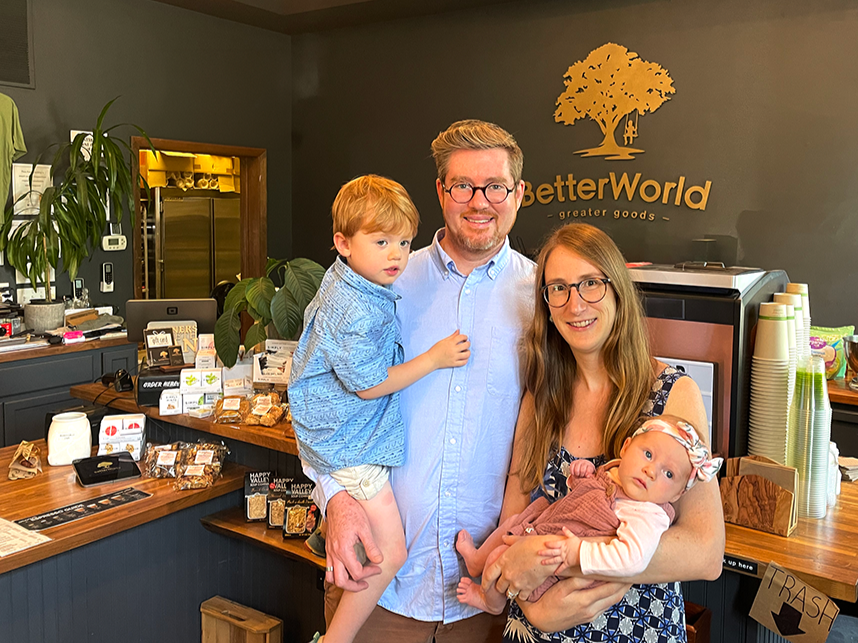
If you’ve heard our accent, you’ll note we’re not exactly from around here. We came over from Western Australia only a few years ago. The most common question we’re asked is why?…why here?
Indeed, creating a store in rural America was never our plan, but we’re so happy we landed here.
[Placeholder image: Aussies at large: Liam, Tegan & little Cedric.]
Our journey began with humanitarian work. We initially came to interview survivors of Chinese slave labor camps with the intent to develop a museum exhibit to help tell their stories and ultimately end a genocide that is tied to China’s labor camp network. There are a growing number of Chinese refugees that have escaped and taken haven in New York and Orange County, which is what drew us to this particular area. The more victims we met that shared their experiences of torture, rape and all manners of evil while being forced to make goods for those of us living in the West, the more passionate we grew about avoiding goods made in China.
Then when Covid-19 halted our museum plans, we shifted our attention to other peaceful solutions to what is happening over there – solutions we can all participate in. Global diplomacy has proven useless, so defunding the Chinese regime by adapting our spending habits and effectively boycotting tyranny has become the only remaining solution. This tactic is true not only for China, but all other systems that enslave their people.
And thanks to Freedom House, global tyranny has already been mapped out for us. We use their Freedom Map to discern which countries are safer to buy from. We’ve been quite pleasantly surprised by how much is still made here in the US and the rest of the free world. Boycotting China while in Australia just wasn’t possible. With barely any local manufacturing left Downunder, and Aussie politicians having all but sold their souls to the Chinese regime, it was easy to feel powerless. But here, with a little research, it is still viable to find a local option or, in the absence of such, an ethical choice from another free nation.
Inspired by the potential, we figured we could try and do something about the other problems the world is facing too. My background is in media and health, and Tegan is an educator with a PhD in environmental science. So we teamed up to map out global censorship, human rights abuse, neglect and environmental destruction. Such a map allows us to see what each offender has in common and gives us a big picture view of their impact on the world. China and Russia have proven themselves to be the worst of all.
We emphasize that it is not the people of these countries that are evil, but the authorities that control them. We determined that even when purchasing goods from an otherwise ethical supplier in these countries, the products are still being taxed by tyrants, thus funding further oppression or environmental damage.
Covid-19 was a wakeup call for what can happen when all our eggs are in one vulnerable basket. A country that doesn’t produce its own goods is on shaky ground. As more people started revising their lifestyles to be more self-sufficient, we saw how much more sustainable that way of living is. Any area that can produce for itself is in a healthier position during global crises; additionally, they also place less demand on international resources. This is also true on a personal level.
Looking into what it means to truly live sustainably through greater self-sufficiency showed us that, when done correctly, everyone wins. Not only is it more economical, it is also better for the environment and helps defund the slave labor market that is eroding humanity.
We started to build a PR campaign to encourage people to start buying according to their values and realized we had to first test that it was possible. And that’s the point in which the store came into play. We were able to not only find enough products to stock one store, but two (we have another store nextdoor), plus source all of the equipment for our cafe almost without a single product from countries like China… there were only a few exceptions – an electric tea kettle and the printing of some of our books (in order to still support local authors).
And that’s the good news. It is possible! It just means investing a little more in local options and a whole lot of research to find them. We recognize research takes time, which is why we share what we know and find. The fair trade market is vast, and we hope to add a lot more product lines as we move forward.
Thanks for being a part of this amazing journey! We couldn’t do it without your support.
Better Origins: How we choose our suppliers
We set out to establish a business that truly does no harm to the earth, or the lives it sustains. So we care about product origins a lot more than most.
For us, it’s local first. If someone is making goods we need in our neighborhood, they’re our obvious choice. We can better see who we’re supporting, what values they uphold, how they do what they do, and we know where to turn if quality falls short of expectations. The same holds true for the rest of the country, to an extent. It’s the single best choice we can all make for the sustainability of our society. And less transportation generally means less resources consumed, which makes it a win win.
Yet, not everything can or is made locally, and even if it is, it’s not always a suitable choice. Local suppliers can’t always keep up with demand, or necessarily care for product quality, or even know what to do when a retailer comes knocking. So some things just have to be sourced overseas.
But which countries are safer to buy from than others? How do we avoid slave labor, environmental destruction, toxic ingredients from areas with different health standards to ours, and even funding genocidal regimes when we can’t meet our makers?
These are big questions. But thankfully, there are organizations such as Freedom House have already mapped these things out for us.
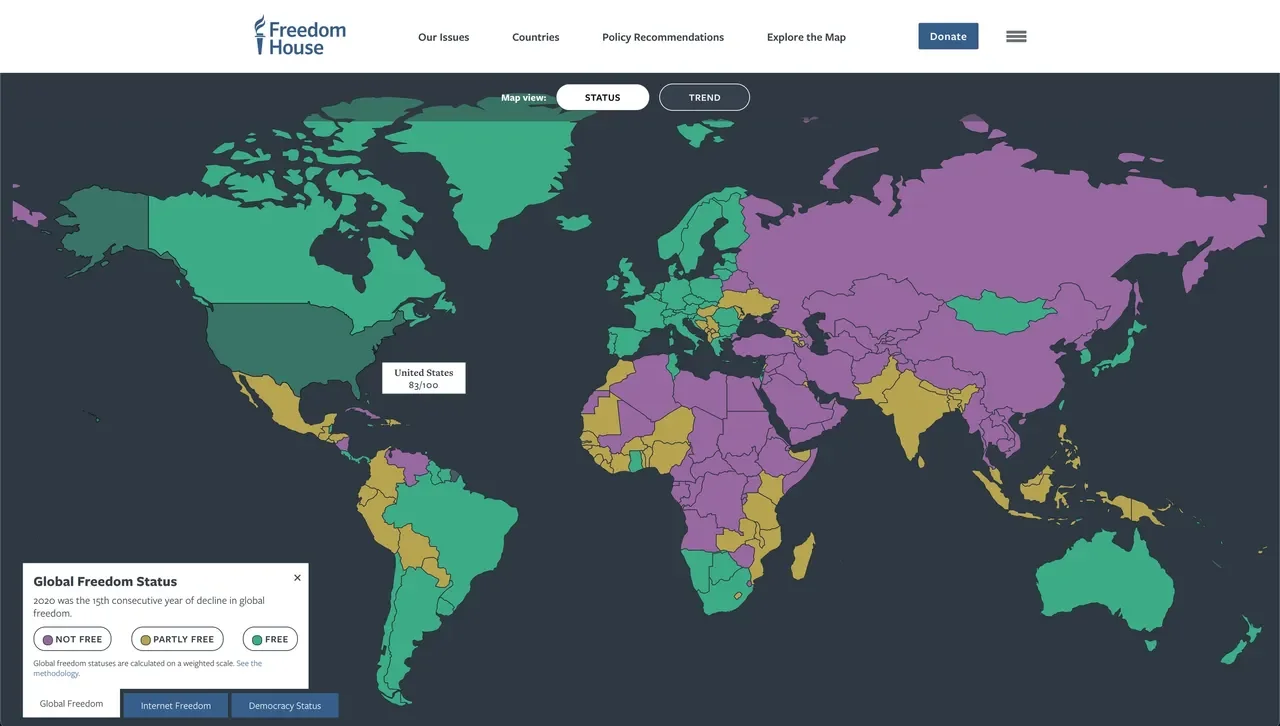
Head to freedomhouse.org/explore-the-map to discover how each country scores in their freedom index
Buying ethically is still possible. We’ve managed to not only stock our entire store, but also equip our cafe, purely from the Free World, principally the US. And here’s how we choose where to draw the line on product origins when we have to venture overseas:
Are the people of that country free? Would we ultimately be helping them or hurting them? Will they be taxed by tyrants or terrorists? What impact will they leave on their local (and our global) environment?
There are actually maps for all these things. Freedom house is where we start…
Hold that thought. I have to rush off to go open up the store now. I’ll show you those maps shortly.
TO BE CONTINUED.
Support a free world with true sustainability
A big part of buying sustainably means paying attention to product origins and global supply chains. We’ve done the necessary groundwork with our entire range for your peace of mind and conscience.
We are pro-humanity.
Every product in our store has been sourced responsibly. We buy local when we can, and only from free countries when we can’t, but never from dictatorships.
As proud patriots and humanitarians, we stock our shelves according to our values. Products made in countries without true freedom are not sustainable sources, no matter how they say they are produced. Ensuring ethically sourced materials just isn’t possible under corrupt regimes.
So support local industry with us. Select from our full range of patriot products for all things made in America, but still shop with confidence with anything in store from beyond our shores too.